Social media has become an important platform for doctors, clinics and hospitals to share health information, educate patients and build trust. However, medical professionals must follow ethical standards when communicating online.
On 6 October 2026, the National Medical Commission (NMC) issued new Guidelines on Ethical Advertising and Public Communication by Hospitals/Medical Institutions and Registered Medical Practitioners. The guidelines address misleading medical advertisements, patient testimonials, exaggerated treatment claims and the use of AI in healthcare promotion. (National Medical Commission)
For doctors and healthcare businesses, understanding these guidelines is essential before publishing promotional content on Instagram, Facebook, YouTube or other digital platforms.
1. Patient Testimonials Cannot Be Used for Promotion
Patient testimonials have been widely used in healthcare marketing. Clinics often share patient feedback, recovery stories and reviews to build credibility.
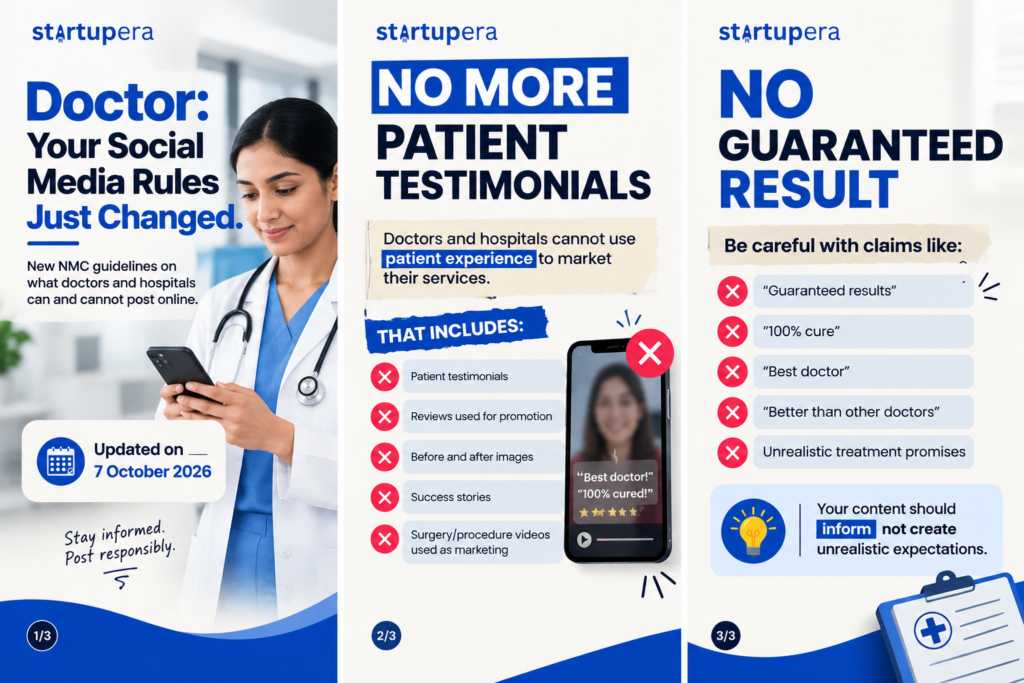
However, the NMC guidelines restrict the use of patient testimonials and success stories for promotional purposes.
Healthcare professionals should be particularly careful about publishing:
- Patient testimonials and endorsements
- Patient success stories used to promote services
- Before-and-after photographs used for advertising
- Surgery or procedure videos presented to showcase impressive results
- Patient photographs or experiences used to attract new patients
Patient information may be used for genuine scientific or educational purposes under the applicable privacy and ethical requirements. It should not be turned into promotional material. (The Indian Express)
What should doctors do instead?
Focus on educational content that explains medical conditions, treatment options, preventive care and general health information without using individual patient experiences to advertise services.
2. Avoid Claims Such as “Best Doctor” or “100% Cure”
Healthcare marketing must not create unrealistic expectations.
Claims such as these can mislead patients:
- “Best doctor in Delhi”
- “100% guaranteed results”
- “Complete cure for every patient”
- “Pain-free treatment guaranteed”
- “No. 1 specialist”
- “Better than every other hospital”
The new guidelines address exaggerated and self-promotional claims. Where a claim about professional standing or an award is permitted, it must be supported by independently verifiable information and the relevant details must be disclosed as required. (The Indian Express)
How can doctors communicate their expertise?
Instead of relying on superlatives, doctors can share factual information about their qualifications, recognised specialisations, clinical interests and areas of practice.
For example, educational content explaining the symptoms of a condition or when a patient should seek medical advice can help people understand their health without promising a particular treatment outcome.
3. Before-and-After Photos Need Special Attention
Before-and-after images are common in cosmetic procedures, dermatology, dentistry and other medical fields.
However, using patient photographs to promote a practice is restricted under the new guidelines.
Healthcare providers should review existing social media posts, website galleries and advertisements containing patient images or treatment outcomes.
A patient’s consent does not automatically make promotional use permissible. The purpose of the content and the applicable NMC requirements must also be considered. (Ichelon Consulting Group)
For educational purposes, medical information should be handled appropriately, with patient identity protected and relevant ethical requirements followed.
4. Fake Reviews, Followers and Ratings Are Not Acceptable
Online ratings and reviews can influence a patient’s choice of doctor or hospital. Manipulating these signals can create a misleading impression of professional credibility.
The NMC guidelines address practices such as:
- Buying fake followers or likes
- Manipulating ratings and reviews
- Using fabricated patient testimonials
- Paying to manipulate search rankings
- Creating misleading impressions of popularity or professional standing
Healthcare businesses should focus on accurate information and genuine public education rather than artificially increasing their online reputation. (The Indian Express)
Doctors should also review the work of marketing agencies or other third parties managing their online presence to ensure that promotional practices remain compliant.
5. Can Doctors Still Use Social Media?
Yes. Educational and public-health communication remains important.
The guidelines allow doctors to share health-awareness information, participate in educational discussions and communicate factual information within the applicable professional standards. (The Indian Express)
Here are examples of content doctors can focus on:
| Content Type | Suggested Approach |
|---|---|
| Health education | Explain common symptoms and health conditions |
| Preventive care | Share information about screening and healthy habits |
| Medical awareness | Discuss when people should seek professional advice |
| Treatment education | Explain general treatment options and limitations |
| Public health | Share verified information from credible sources |
| Professional information | Communicate factual qualifications and practice details within applicable rules |
The key is to educate the public without making misleading claims or turning patient experiences into advertisements.
6. What About AI-Generated Healthcare Content?
AI tools are increasingly used to create social media posts, videos, graphics and marketing campaigns.
The new guidelines specifically address AI-generated or AI-assisted content that makes misleading, deceptive or unverifiable representations about diagnoses, treatments, clinical outcomes, professional qualifications, patient experiences or healthcare services. Synthetic testimonials and images that could be mistaken for genuine patient experiences are also a concern. (The Indian Express)
Doctors and hospitals should therefore avoid using AI to fabricate:
- Patient reviews or testimonials
- Treatment success stories
- Medical results
- Doctor qualifications
- Images presented as real patients
- Claims about the effectiveness of a treatment without reliable evidence
AI can assist with drafting educational content, but medical information should be checked for accuracy before publication.
7. What Happens If the Guidelines Are Violated?
The guidelines provide for disciplinary measures, including warnings and ethics training for first violations, monetary penalties and censure in subsequent cases, and possible suspension or removal from the medical register in more serious or repeated cases.
The applicable action depends on the nature and seriousness of the violation. Hospitals may also face consequences under relevant laws, including the Clinical Establishments Act where applicable. (The Indian Express)
Doctors and healthcare institutions should read the official guidelines carefully rather than relying only on social media summaries.
8. How Doctors Can Build an Ethical Digital Presence
Doctors do not need misleading claims or promotional testimonials to provide useful information online.
A responsible digital communication strategy can include:
Educational Reels: Explain common health conditions and preventive measures.
Informative Carousels: Share symptoms, risk factors and general health guidance.
Doctor-Led Videos: Discuss medical topics within the doctor’s expertise.
Frequently Asked Questions: Answer general questions without providing individual diagnoses through public comments.
Website Content: Publish accurate information about services, qualifications and patient-care processes.
Content Review: Check medical accuracy, privacy and compliance before publishing.
These practices help healthcare professionals maintain an informative online presence while respecting professional responsibilities.
9. What Healthcare Marketing Agencies Should Do
Healthcare marketing agencies also need to understand the rules that apply to their clients.
Agencies working with doctors, clinics and hospitals should review their existing campaigns and content calendars for potentially misleading claims, patient testimonials, before-and-after photographs, fake reviews and inappropriate AI-generated content.
They should also establish a review process with the healthcare professional before publishing medical information.
At StartupEra, we believe healthcare marketing should focus on education, accurate information and responsible communication.
Digital marketing can help healthcare organisations make useful information accessible to the public, but campaigns should be designed around the applicable medical ethics and advertising requirements.
Final Thoughts
The NMC’s October 2026 guidelines highlight the importance of ethical communication in digital healthcare.
Doctors and hospitals should review their existing content, understand the restrictions on promotional claims and patient testimonials, and ensure that future communication remains factual and responsible.
The goal is not simply to avoid misleading advertising. It is to help patients access reliable information and make informed healthcare decisions.
Before publishing medical marketing content, consult the official NMC guidelines and obtain professional advice where necessary.
Official Source
Read updates and notices from the National Medical Commission.
Disclaimer: This article is for general information and is not legal advice. Healthcare professionals should consult the official guidelines and relevant regulatory authorities regarding their specific circumstances.